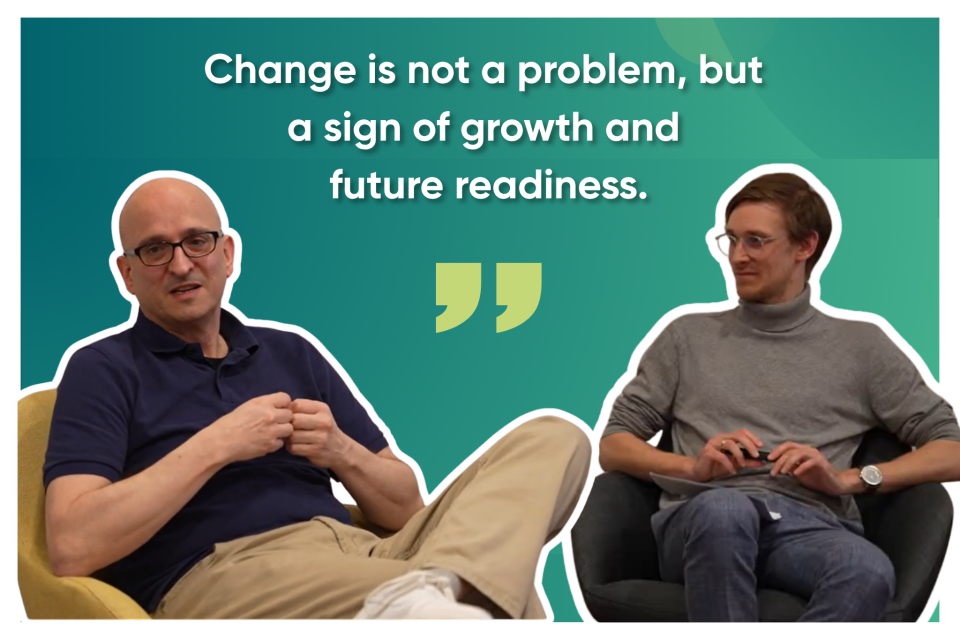

Andreas Schwarz, transformation expert and Principal Consultant at RELEVANT, knows the challenges of change firsthand. In previous roles, he led large-scale digital transformation initiatives and experienced how profoundly transformation can impact both organizations and the people within them.
“Change is part of working life. The key is to be willing to help shape it, to endure it when necessary, and to speak up when it’s time to drive change forward,” says Schwarz, reflecting on his most important lesson from years of transformation work.
At the same time, he does not shy away from acknowledging the challenges that come with growth and change. Processes are redefined, responsibilities become clearer, and established ways of working are questioned. “At times, things range from carefully structured planning to enthusiastically chaotic execution. But when people work together toward a common goal, it becomes much easier to navigate the challenges that arise from transformation.”
Asked how dynamic modern organizations need to be today, Schwarz takes a clear stance: Change is not a problem, it is a sign of growth and future readiness.
In his view, one of the most important success factors is personal reflection. Transformation affects not only processes and structures, but also the people behind them. That is why he believes it is essential for employees to regularly reflect on and develop their own role. “I’ve seen that reflective individuals and teams navigate change much more successfully. They have a better understanding of how change affects them and what it means for their work and development.”
For transformation to succeed, Schwarz sees the right balance between structure and agility as critical. Clear visions, shared goals, and continuous prioritization help organizations shape change in a focused and purposeful way. At the same time, they must not lose the flexibility required to adapt.
“We often want to preserve some of the dynamism and spirit of earlier stages of growth, while still maturing as an organization and formalizing certain processes without losing our identity,” Schwarz explains. In his view, this is the real challenge of successful transformation.
His conclusion highlights why change should no longer be viewed as an exceptional situation: “Transformation will remain a permanent topic.” The key, he argues, is not to avoid change but to develop the ability to shape it together. With an open culture, a clear vision, and a strong commitment to personal reflection, organizations create the best possible conditions for long-term success.
Our Authors
Andreas Schwarz